Roberto Pignataro - FAQs
This page provides concise answers to common questions about Roberto Lucio Pignataro, his work, and the archive. It serves as a general point of reference for readers, researchers, and curators seeking a clear overview of his artistic practice and historical context.
-
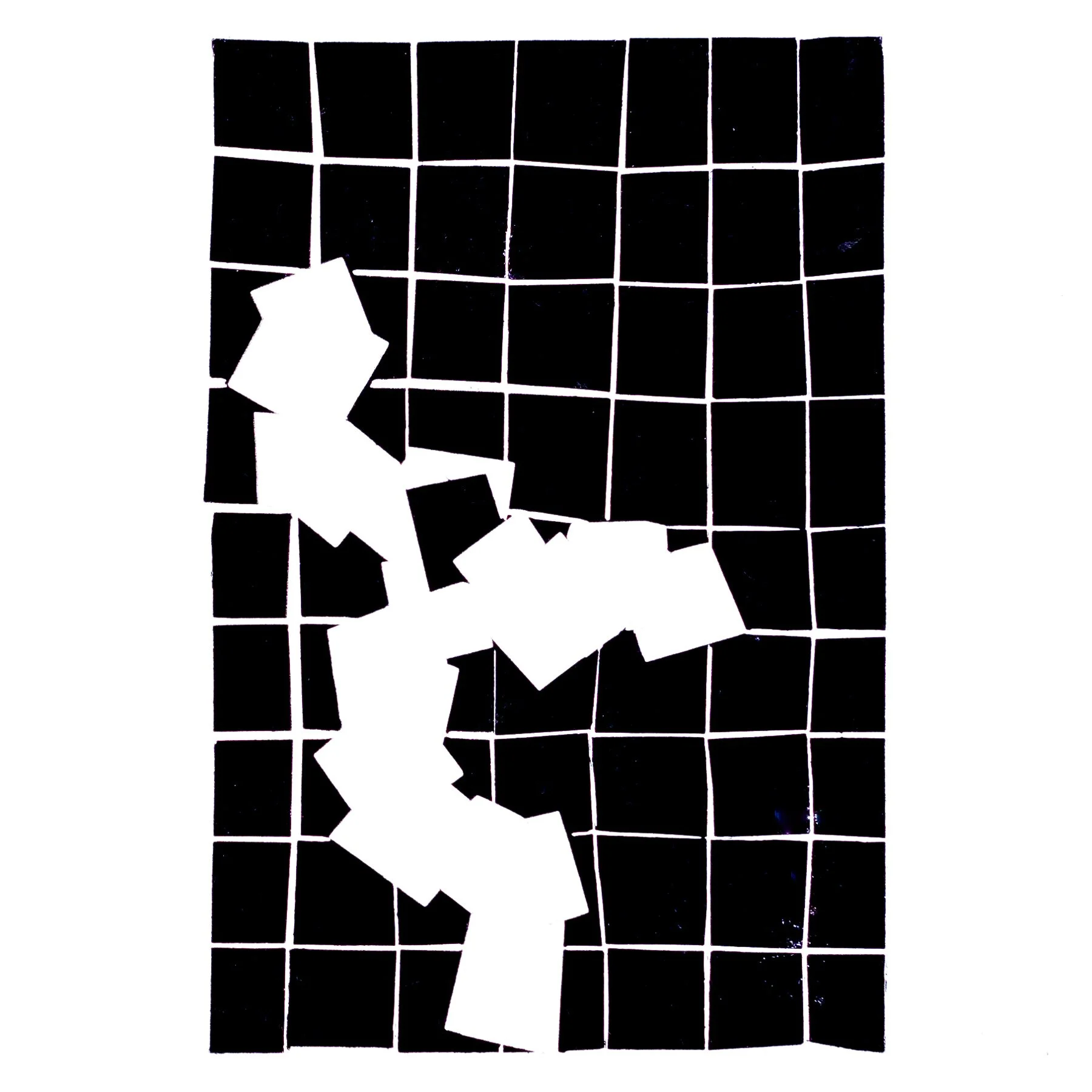
Roberto Lucio Pignataro (1928–2008) was an Argentine abstract artist associated with the Informalist movement. Active in Buenos Aires from the 1950s through the early 1980s, he developed a highly individual visual language through painting, collage, and assemblage, often emphasizing material presence and non-representational structure.
-
To answer this question, it is important to first understand that Roberto Pignataro made art primarily out of personal conviction and creative necessity, rather than from a desire for fame or celebrity.
Even so, he received meaningful critical attention during his active years: his work was regularly exhibited and discussed by important figures of the period, including Hernández Rosselot, César Magrini, and Jorge Romero Brest.
His limited visibility today has less to do with a lack of recognition than with how artistic visibility worked at the time. In the 1960s, an artist’s reputation depended on access to well-established institutional or commercial channels capable of sustaining attention beyond the moment of a show.
Pignataro understood this, but chose to build his reputation along a more independent path. He preferred to circulate his own work, maintain control over how and when it was presented, and remain free from the pressures of commercially and ideologically driven structures.
This choice gave him the autonomy he valued, but it also limited the mechanisms through which his work could remain visible over time — a tradeoff he appears to have understood and accepted.
-
Roberto Pignataro did not structure his practice around the commercial sale of his work. While he exhibited regularly and actively sought to circulate his work, he maintained a clear distinction between showing the work and offering it for sale.
This position is best understood in context. Pignataro belonged to a generation of Argentine artists emerging in the late 1950s and 1960s for whom art was often less about commercial ambition than about personal conviction, experimentation, and engagement with a rapidly changing cultural environment.
In his case, this was also made possible by financial independence. His stable career at the Argentine Central Bank allowed him to pursue art without depending on sales. As a result, his work remained outside the market during his lifetime and was preserved first in his own possession, and later within the family archive.
-
Roberto Pignataro maintained a highly prolific artistic practice over several decades, producing a substantial body of work across painting, collage, and assemblage. While an exact total is still being established, current cataloguing indicates that his output extends well beyond 1,000 works.
His production can be broadly understood across two main periods: an early Art School Period (1953–1960), from which over 500 works have already been catalogued, and a subsequent Exhibition Period (late 1950s–1982), during which he exhibited over 400 unique works across twenty-eight shows and produced many more.
In addition, a series of artistic publications developed between 1968 and 1974 reflects his exploration of alternative formats for presenting and circulating his work.
-
Roberto Pignataro worked across painting, collage, and assemblage, employing a wide range of materials beyond traditional oil on canvas. His works often incorporate construction paper, cork, sisal thread, and other everyday elements, which he combined to build layered and physically complex surfaces.
A defining aspect of his practice is his use of oil paint as a structural material. Rather than applying it solely as a pictorial medium, he developed techniques that allowed the paint itself to take on a three-dimensional presence, forming raised shapes and textured fields across the surface.
This approach places his work at the intersection of painting and object-making, where composition is not only visual but also physical, and where the interaction of materials plays a central role in the final result.
-
Roberto Pignataro’s work developed in close proximity to the broader transformations taking place in Argentine art during the 1960s. He shared a formative context with artists who would later become prominent figures of the avant-garde, including Marta Minujín and Carlos Pérez Célis, and his work engaged with many of the same concerns surrounding abstraction, materiality, and experimentation.
At the same time, his practice followed a more independent trajectory. While he explored related visual languages—particularly in areas such as assemblage and material-based abstraction, also present in the work of artists like Luis Wells and Kenneth Kemble—he did not operate within the central institutional circuits that defined the most visible avant-garde activity of the period.
There were also important differences in approach. Whereas much of the avant-garde increasingly incorporated verbal, conceptual, and performative frameworks around the artwork, Pignataro remained committed to the idea that art is best experienced without prescribed context, allowing meaning to emerge from the viewer’s unfiltered encounter with the work itself. His practice stayed focused on the object and its material presence, rather than on the articulation of external narratives or predetermined interpretations.
For these reasons, his work is best understood as part of the same historical moment and field of experimentation, but developed from a position of autonomy rather than direct alignment with any specific movement or institutional framework.
-
Yes. Roberto Pignataro published three artistic books between 1968 and 1974: A Través de Estampas (1968), En Slides Color (1972), and A Través de Estampas Vol. II (1974). These were not conventional books about art, but artistic objects in their own right, conceived as portable formats through which abstract imagery could be experienced sequentially, outside the limits of gallery exhibitions.
Across these publications, Pignataro explored what he called abstract storytelling: the idea that a sequence of non-representational images could suggest movement, mood, and narrative without relying on written explanation. He intentionally avoided prefaces, manifestos, or verbal guidance, allowing meaning to emerge from the viewer’s own encounter with the images.
The books also reflected his interest in expanding the circulation of his work. They were distributed through bookstores in Buenos Aires and mailed as promotional material to art-related institutions abroad, while En Slides Color pushed the format further by presenting sixteen 35mm slide abstractions intended to be projected.
-
The Roberto Pignataro Archive is a privately maintained collection dedicated to the preservation, documentation, and study of the artist’s work and legacy. It holds a substantial portion of his artistic production, along with supporting materials such as photographs, correspondence, publications, press clippings, and exhibition records.
One unusual aspect of the archive is the level of documentation Pignataro kept around his exhibitions and working process. These records provide rare insight into how his shows were planned, produced, presented, and received. Some of this material is publicly available in the Exhibitions section of this website, where selected records appear as supplementary materials at the bottom of individual exhibition pages.
The archive is actively engaged in cataloguing and organizing these materials, with the aim of establishing a comprehensive and accurate record of Pignataro’s career for research, curatorial inquiry, and institutional collaboration.
-
Roberto Pignataro’s work is primarily preserved within the family archive, which maintains nearly the entire known collection, with only a small number of exceptions. One artwork, R.F. 434 C.O., is held in the permanent collection of the Buenos Aires Museum of Modern Art, along with two of his experimental art books, A través de estampas I and A través de estampas II.
While his work is not currently on permanent public display, it has been extensively documented through photographs, exhibition records, and publications, many of which are available through this website. Access to the physical works is possible by appointment for research, curatorial review, and institutional inquiries.
To learn more about Roberto Pignataro, visit our Blog, About and Biography sections. For specific research or curatorial inquiries, please contact us.